The Science of Summer Blonde: How to Protect Your Colour into August
Every summer we see it: a beautiful blonde walks in around mid-August looking a little brassy, a little dry, and a lot less bright than they did in June. It is not bad luck and it is not your fault. It is chemistry. Understanding exactly what the sun, sea and pool are doing to your colour is the best way to keep your blonde gorgeous all the way into autumn, so let us get properly nerdy about it.
Why Blonde Fades in the Sun
 Your hair is made of keratin, a protein, and once it leaves your scalp it is technically no longer living, which means it cannot repair itself. Your colour, whether natural or from us, sits inside the cortex, the core of each strand. When ultraviolet light hits it, it triggers a process called photo-oxidation, where UV energy breaks apart both your natural melanin and artificial toner molecules.
Blondes show this faster than anyone because there is less pigment to begin with, so every bit of fading is visible. The warm, yellow and orange undertones that toners are designed to cancel out are the most stubborn, so as the cool tones break down first, brassiness rises to the surface. That is the science behind the classic "my blonde went yellow on holiday" complaint.
The Damage You Cannot See
UV does not just fade colour, it weakens the structure of the hair itself. Sunlight oxidises the disulphide bonds, the strong internal links that give hair its strength, converting cystine into a weaker compound called cysteic acid. At the same time the cuticle, the protective outer layer of overlapping scales, lifts and roughens.
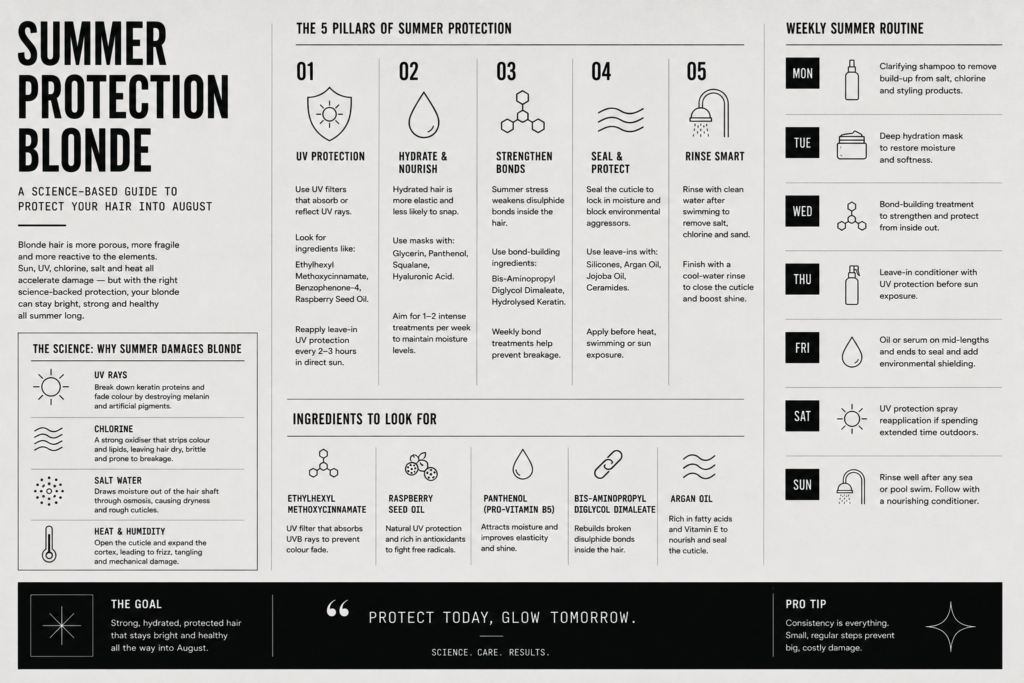
The result is hair that is more porous, drier and more prone to breakage and split ends, and here is the cruel twist: porous hair also loses colour faster, because a raised cuticle lets toner molecules wash straight out. So sun damage and colour fade feed each other, which is why unprotected summer hair can spiral downhill quickly.
Chlorine, Salt and Hard Water
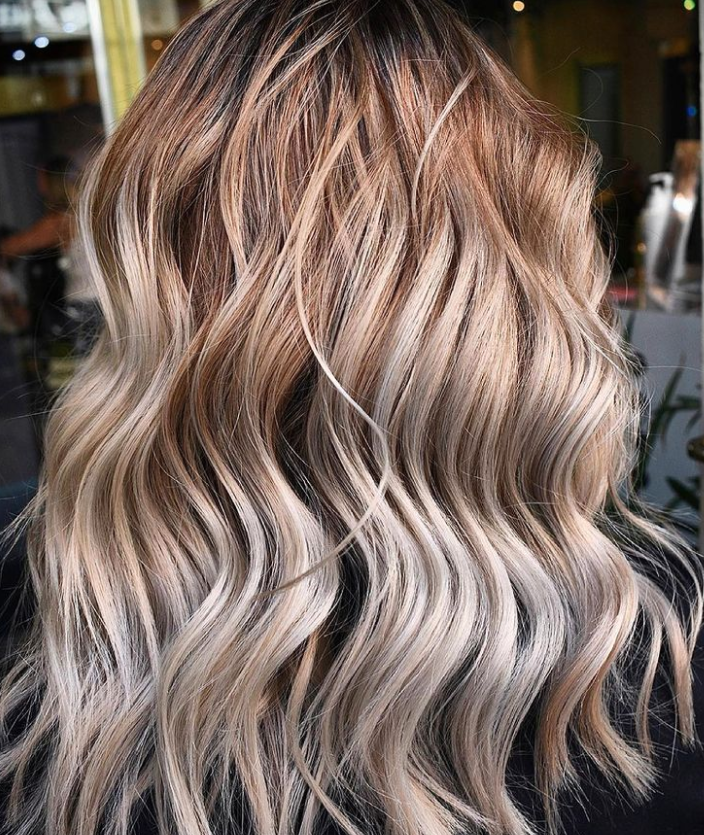 The sun is only half the story. Chlorine is an oxidising agent, so it strips colour and dries the hair, and if there is copper in the pool water, it can bind to lightened hair and throw a green tint over your blonde. Yes, that green really is copper, not the chlorine itself. Salt water is dehydrating too, drawing moisture out and leaving the cuticle rough and thirsty.
There is a simple trick rooted in the science here. Wet your hair with clean tap water before you swim, because hair that is already saturated absorbs far less of the pool or sea water. A leave-in conditioner on top adds a barrier, so your hair drinks in your clean water and product rather than the chlorinated stuff.
How to Protect Your Colour into August
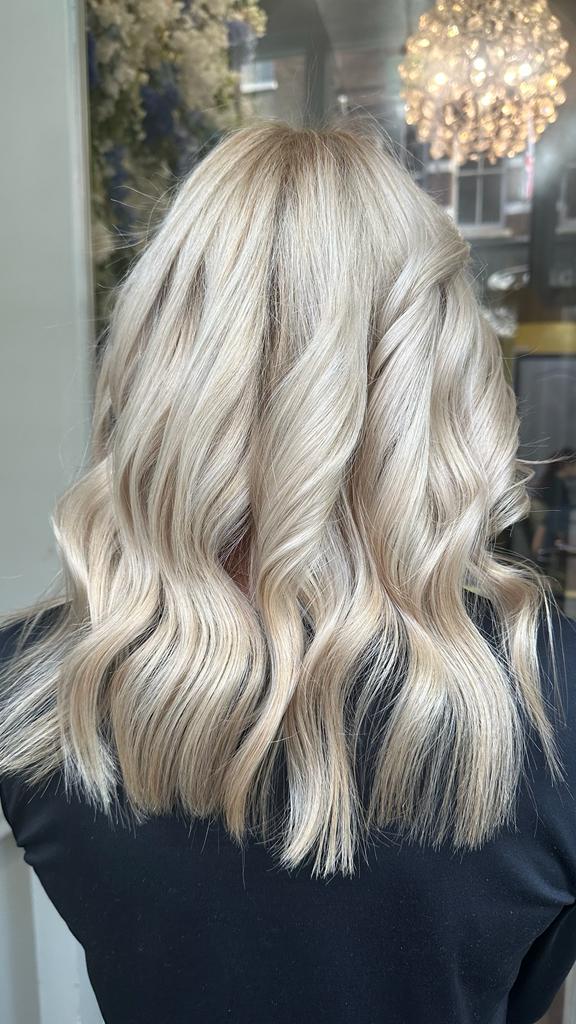 The best defence is layered. Use a leave-in or spray with UV filters, which work a little like sunscreen for your hair, and wear a hat on the brightest days, because a physical barrier beats anything else. Rinse your hair as soon as you can after swimming so salt and chlorine are not sitting on it for hours in the heat.
At home, wash a touch less often with cooler water and a sulphate-free shampoo, use a purple or blue toning product to keep brassiness in check, and feed the hair with a weekly bond-building or moisture mask to rebuild what the sun has roughened up. And come and see us for a gloss or toner top-up: a quick in-salon refresh re-seals the cuticle and resets your tone, so you sail into autumn bright rather than brassy.
Want your blonde to survive the summer in style? Our colour teams at Oxford Street and Covent Garden can tone, gloss and treat your hair so it stays bright into August and beyond. Book online at Gusto Oxford Street or Gusto Covent Garden and keep your colour glowing.