Best Haircuts for Fine and Thin Hair
Fine hair gets a tough rap, but here's the truth: with the right cut, fine hair can look thicker, glossier and more polished than naturally thick hair ever does. The trick is choosing a haircut that works with your texture rather than against it.
Most fine-hair disasters come from one of two mistakes — too many layers (which makes the ends look wispy) or too much length (which drags hair flat). The right cut adds the illusion of density exactly where you need it. Here are the cuts our colourists and stylists recommend most for fine and thin hair.
Fine vs Thin: What's the Difference?
Quick clarification, because they're often confused:
Fine hair describes the diameter of each individual strand. You can have a lot of fine hair (high density) or very little (low density). Fine strands feel silky, behave softly, and don't hold curl as well as thicker textures.
Thin hair describes density — how many strands you have per square inch. You can have thick, coarse strands but low density (thin hair), or fine strands at high density.
Most people we see have a combination: fine strands at lower density. The cuts below work brilliantly for both.
The Blunt Bob
Single most thickening cut you can get. Cutting hair to one length — no internal layers — creates a heavy, defined line at the ends that reads as density. The illusion is striking. A chin-length or jaw-length blunt bob can make fine hair look almost twice as thick.
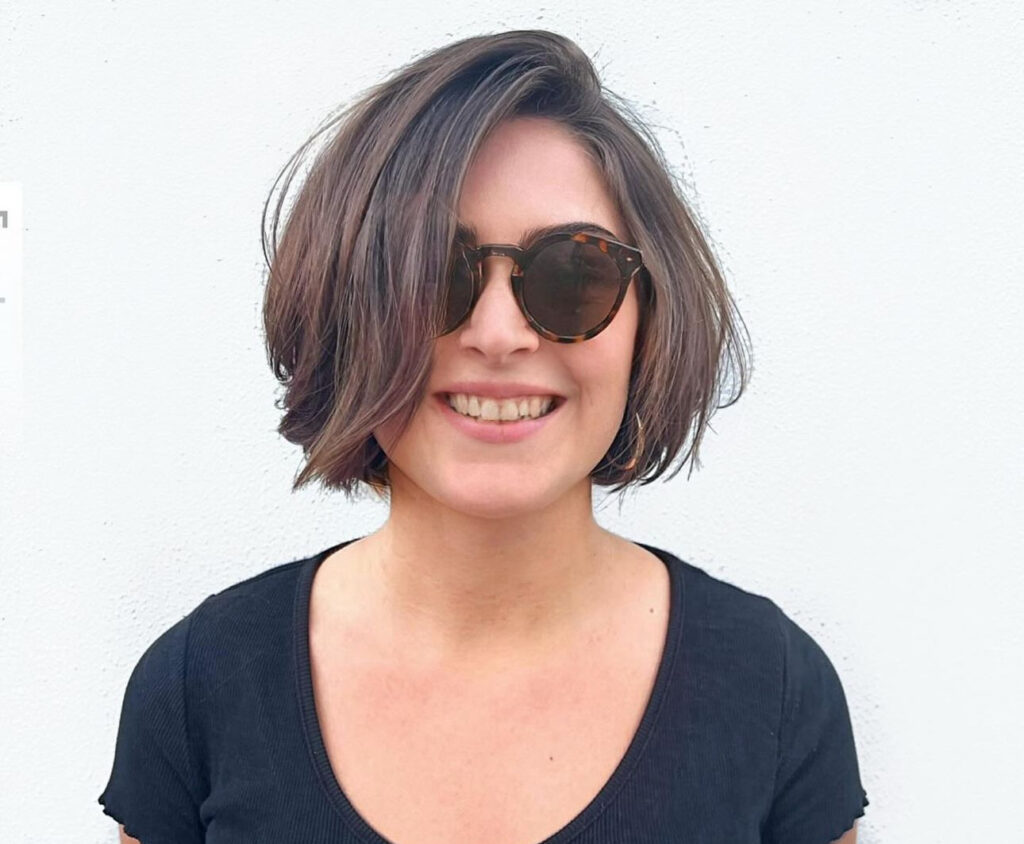
The key is the ends. Ask for a blunt cut with a fractionally point-cut finish to soften the edge — you want defined, not stark. Style with a round brush for a slight inward curve, which adds even more visual fullness.
The Long Bob with Light Layers
For anyone not ready to go to the chin, a long bob (lob) sitting at the collarbone is fine hair's other best friend. The crucial detail: keep layers minimal and only in the bottom third. Fine hair needs weight to hang properly.
A few longer layers around the face and through the ends add movement without taking out the density. Avoid heavy internal layering or anything described as "choppy" — it'll thin out the ends and make hair look limp.
The Pixie
Counter-intuitive but true: cutting fine hair short can make it look twice as thick. A pixie removes all the dead weight that drags fine hair flat and creates instant texture and lift through the crown.
The textured pixie is what to ask for — layered through the top for volume, tapered at the sides, with a fringe or longer pieces to soften. A short, choppy crop also works beautifully for thinning hair on top, especially as it disguises any scalp visibility.
The Soft Shag
A modern shag — not the dated version — is excellent for fine hair because it builds visual volume through clever layering. Shorter pieces through the crown, longer wispy ends, and a curtain fringe. The result looks like you've got more hair than you do.
Best on medium-length hair (collarbone to shoulder-blade). Style with a texture spray and a quick scrunch — fine hair shouldn't be over-styled or it'll fall flat by lunchtime.
What to Avoid
A few cuts to skip, even if they're trending:
Long, layered hair. Fine hair below the shoulder-blades almost always looks stringy at the ends. Either go shorter or cut more bluntly.
Heavy choppy layers. Anything described as "razored" or "heavily textured" will thin out the ends and make hair look wispy.
One-length blunt cuts longer than the collarbone. Without movement and lift, very long blunt hair on fine textures can look heavy and lifeless.
Colour Strategy for Fine Hair
Colour can make fine hair look denser if it's done right. The basics:
Dimensional colour. A balayage, foilayage or babylight technique adds visual depth and shadow, which fools the eye into seeing more hair. Single-process colour, especially flat dark tones, can do the opposite.
Shadow root. A slightly darker root with lighter mid-lengths creates the illusion of fullness right where you want it.
Glossing treatments. Fine hair shows shine more obviously than thick hair. Regular glosses or in-salon treatments make a huge difference to perceived volume.
Daily Styling for Fine Hair
A few habits that genuinely help:
Dry upside-down. Five minutes of rough-drying upside-down at the roots gives you more lift than any volumising product.
Skip the conditioner at the roots. Conditioner is great for ends but weighs roots down. Apply mid-lengths only.
Use mousse, not cream. Mousse adds body without weight. Cream-based products are usually too heavy for fine hair.
Less washing, not more. Fine hair gets oily fast, but daily washing strips it. Two or three times a week with good dry shampoo in between works for most people.
Find the Right Cut for You
Fine hair is genuinely one of the most rewarding hair types to work with when you find the right stylist. The transformations are dramatic — people leave the salon looking like they've grown a head of new hair.
Our stylists at Gusto Hair, with salons on Oxford Street and in Covent Garden, specialise in cuts that maximise fine and thinning hair. Bring a couple of reference photos and we'll design the version that works for your texture, density and lifestyle. Book at Oxford Street | Book at Covent Garden.