
Best Hair Colour for Grey Hair
Choosing the best hair colour for grey hair isn’t one-size-fits-all – it depends on how much grey you have, your skin tone, and how much upkeep you’re happy to do. The sweet spot for most people is a shade and technique that softens regrowth lines, adds dimension, and keeps your complexion looking fresh rather than washed out.
1. Decide: Cover, Blend or Embrace?
Before picking a shade, decide what you actually want from your colour.
Full coverage: Permanent colour can give up to 100% grey coverage when applied at the roots, ideal if you want every silver hidden.
Soft blending: Grey blending uses highlights and lowlights to mix your natural colour with your greys, so regrowth is softer and maintenance is lower.
Embracing grey: Toning your natural silver with cool or soft beige hues can make it look deliberate, glossy, and expensive rather than dull.
A good rule: the more you fight your natural pattern, the more often you’ll be in the salon for top-ups.
2. Flattering Colour Ideas by Starting Shade
These are some of the most flattering directions, especially popular in UK salons right now.
If you’re naturally dark blonde to light brown
Ash blonde blend: Cool ash blonde with fine highlights lifts and brightens grey strands while neutralising brassiness, so greys look like intentional shimmer rather than wiry streaks.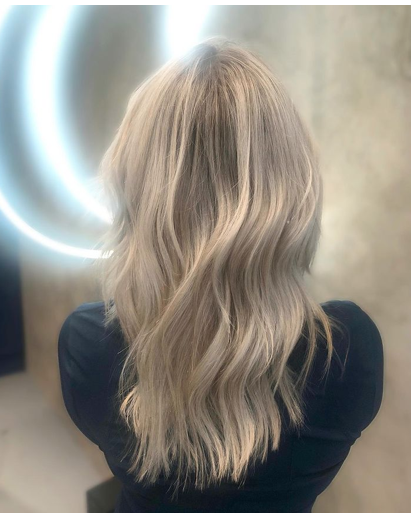
Beige or mushroom tones: Soft beige or “mushroom” blonde-brown mixes cool and neutral tones, which stops your skin looking sallow and keeps the overall effect very natural.
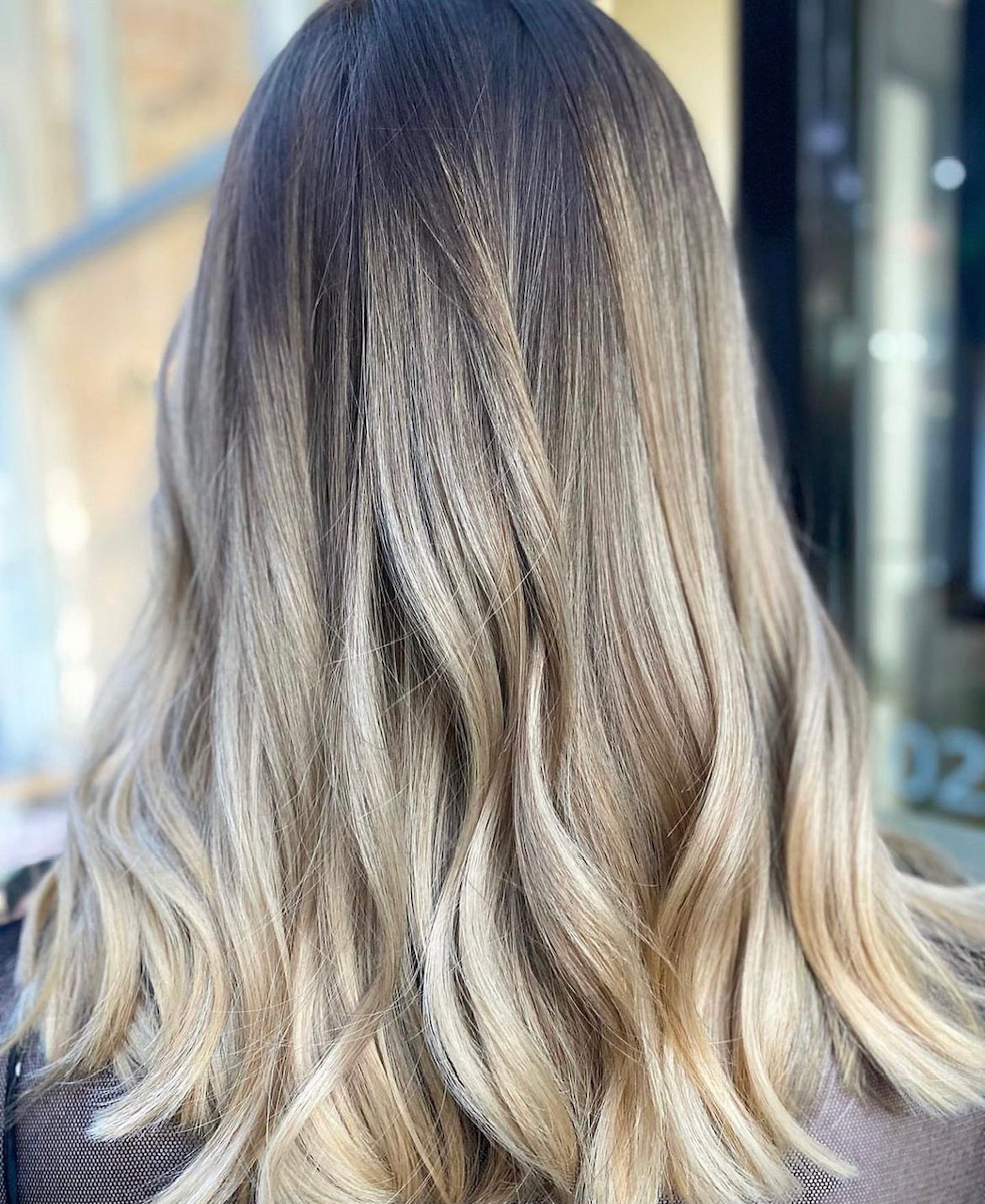
If you’re naturally brunette
Earthy or mushroom brown: Cool–neutral brunette with hints of ash and grey gives a sophisticated, multi-dimensional result and avoids the harsh line you get with flat box browns.
Brunette with soft highlights: Subtle highlights and lowlights around the face add brightness and help grey strands melt into the rest of the hair, rather than sitting in obvious streaks.
If you love warmth
Soft copper brown: Modern copper-brown tones are very on trend and can be formulated to give strong grey coverage while still looking glossy and multi-tonal.
Golden brunette: Golden or mahogany brunette shades can warm up the complexion and blend scattered greys beautifully, especially when applied in finer, dimensional sections.
3. Techniques That Make Grey Look Expensive
The technique often matters more than the exact shade name.
Root shadowing: A slightly deeper root with lighter lengths gives great grey coverage at the scalp while keeping the overall finish soft and modern, not “blocky”.
Balayage and micro-highlights: Painting colour freehand or in very fine weaves helps greys disappear into the blend, avoids harsh lines, and grows out gracefully.

Grey blending: Deliberately adding cool highlights and slightly deeper lowlights around your natural grey gives that “expensive salt-and-pepper” look people like Emma Thompson have made popular.

An example: someone with 40% grey dark brown hair might have cool ash micro-highlights and slightly deeper lowlights, creating a soft, smoky brunette where the grey simply reads as extra dimension.
4. Matching Your Skin Tone
Getting the undertone right is key to avoiding that drained look.
Cool or neutral skin: Ash blonde, mushroom brown, earthy brunettes and silvery tones usually sit best, as they mirror the coolness in your skin.
Warm or olive skin: Soft golden browns, beige blondes and warm coppers can add healthy warmth, but they still benefit from a touch of neutral or ash to avoid looking brassy.
Mature skin: Overly dark, flat colours can harden facial features; slightly lighter, multi-tonal shades around the face are more flattering and forgiving.
A professional colourist will usually assess your skin and eye colour alongside your natural base to tailor the undertone mix.
5. Maintenance, Damage and Longevity
Grey hair tends to be coarser and drier, so your colour choice needs to respect that.
Permanent vs demi-permanent: Permanent colour gives the strongest grey coverage but can be more drying; demi-permanent is gentler and ideal for blending or first-time colouring.
Root regrowth: Solid dark colours on very grey hair will show a sharp line within weeks; softer blends and slightly lighter shades buy you more time between appointments.
Home care: Use sulphate-free, colour-safe shampoos, cool water, and regular masks to keep both grey and coloured hair soft and glossy.
6. Overview of Great Options for Grey Hair
| Goal | Shade direction | Technique focus | Maintenance level |
|---|---|---|---|
| Hide greys completely | Neutral or ash brunette, deep copper brown | Root tint + soft root shadow | Higher |
| Soften and blend greys | Ash blonde, mushroom brown, earthy brown | Balayage, micro-highlights, lowlights | Medium |
| Embrace natural silver | Cool beige-grey toners | Glossing, subtle lowlights | Lower |
7. Bringing It Back to the Salon Chair
The “best” hair colour for grey hair is the one that works with your natural pattern, suits your skin tone, and fits your lifestyle – not the shade on the front of a box. A good colourist will talk through how much grey you have, where it’s concentrated, and how often you realistically want to maintain it before recommending anything.
If you’re in or around Bristol and feeling unsure where to start, a professional consultation can be a game-changer, especially for first-time grey coverage or blending. Ready to find a colour that makes your greys look intentional, modern and flattering? Our award-winning stylists at Gusto Hairdressing are here to help – book your consultation today.