The V-Shaped Fade: 2026’s Sharpest Nape Detail
Fades have had a good decade. Skin fades, taper fades, burst fades, drop fades – most of the innovation in men’s barbering over the last few years has happened at the sides. The V-shaped fade flips that script. Instead of another spin on how the hair blends into the skin, it changes the shape of the hairline itself, and the result is one of the crispest, most talked-about details in modern men’s cuts. If you’ve scrolled past a K-pop stage or a footballer’s post-match interview lately and clocked a sharp little point at the nape of the neck, that’s this.
What Is a V-Shaped Fade?
A V-shaped fade takes the usual horizontal or rounded line at the back of the neck and cuts it into a defined point, so the hairline dips down into a V rather than sitting flat. It’s usually paired with a skin or low fade at the sides so the whole thing tapers cleanly into bare skin, with the V sitting neatly in the centre of the nape.
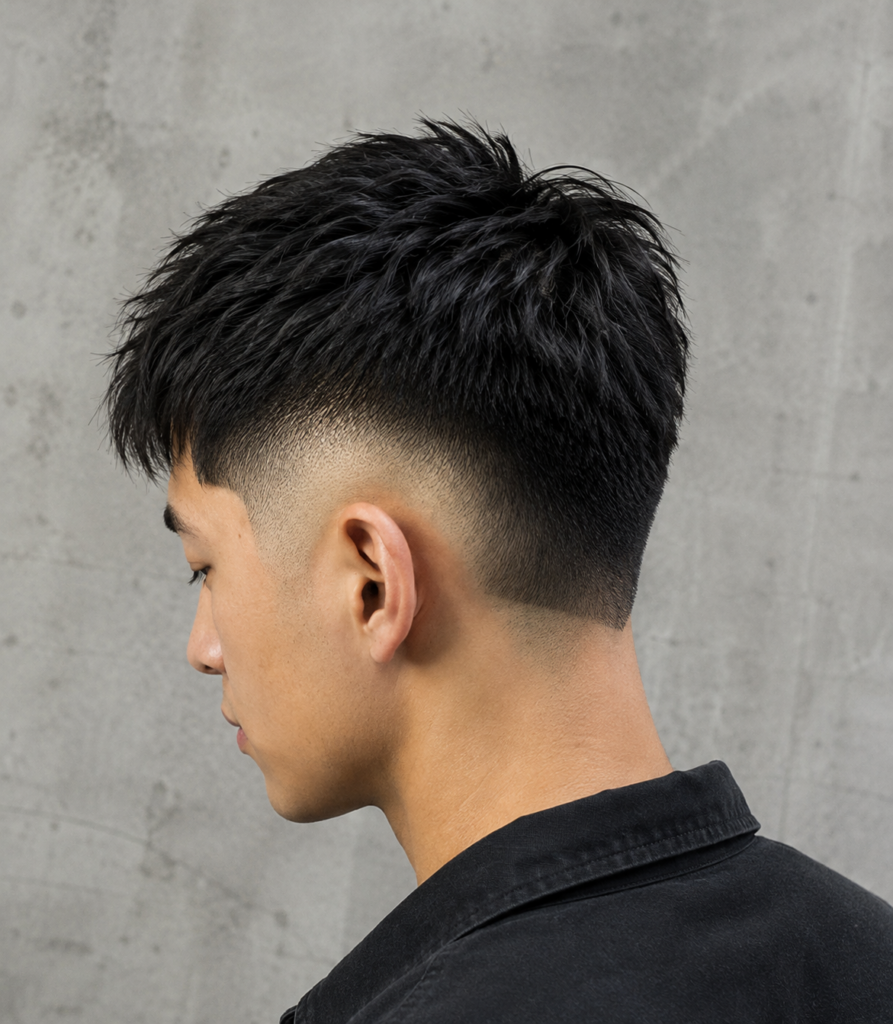
It’s a small detail with a big effect. Where a standard fade reads as tidy and understated, the V adds a bit of edge and intention – it looks deliberate rather than just “cut short and blended.” Barbers usually create it with clippers and a straight razor for the sharpest possible line, since any wobble in the point is immediately noticeable.
Where It Comes From
The V-shaped fade has roots in Korean and East Asian barbering, where precise, architectural nape lines have been a signature move for years, often worked into two-block cuts and other styles with strong, structured silhouettes. It’s since crossed over into mainstream Western barbering, picked up by footballers, K-pop idols and street-style regulars, and has become a genuine trend rather than a niche request. Think of it as the natural evolution of the shape-up: barbers have always sculpted hairlines at the front and sides, and now that same precision is being applied at the back.
It’s a particularly strong choice if you’ve got a naturally low or slightly uneven hairline at the back, because the V gives the barber something structured to work with rather than trying to disguise it. And because it’s still a relatively rare sight in London barbershops, it reads as a bit more considered than your average fade – a good option if you want your cut to look sharp without shouting about it.
How to Ask Your Barber For One
It’s also worth mentioning what kind of fade you want either side of it. A skin fade gives the cleanest possible contrast and makes the V pop the most; a low or mid fade softens things slightly if you want something a touch more everyday. At Gusto, our barbers will talk you through the options and mark out the line before they touch a razor to it, so there’s no surprises.
Styling and Upkeep
The good news is that a V-shaped fade needs almost nothing in the way of daily styling – the work is all in the cut, not the product. A quick tidy with clippers keeps the sides sharp, while the top can be styled however suits you, from a natural textured finish to something more polished.
The line itself does need regular upkeep to stay crisp. Fades in general grow out faster than most cuts simply because there’s more contrast to lose, and a precise shape like a V shows growth even more obviously than a standard fade line. We’d recommend booking in every two to three weeks to keep the point sharp and the fade blending cleanly, rather than letting it soften into a vaguer shape at the back.
If you like the sound of a detail that’s sharp, low-maintenance and still a bit different from every other fade on the high street, come and see us. Our barbers at Gusto Hair are used to precision work like this and will happily walk you through what will suit your hair and head shape best.
Book at Oxford Street | Book at Covent Garden