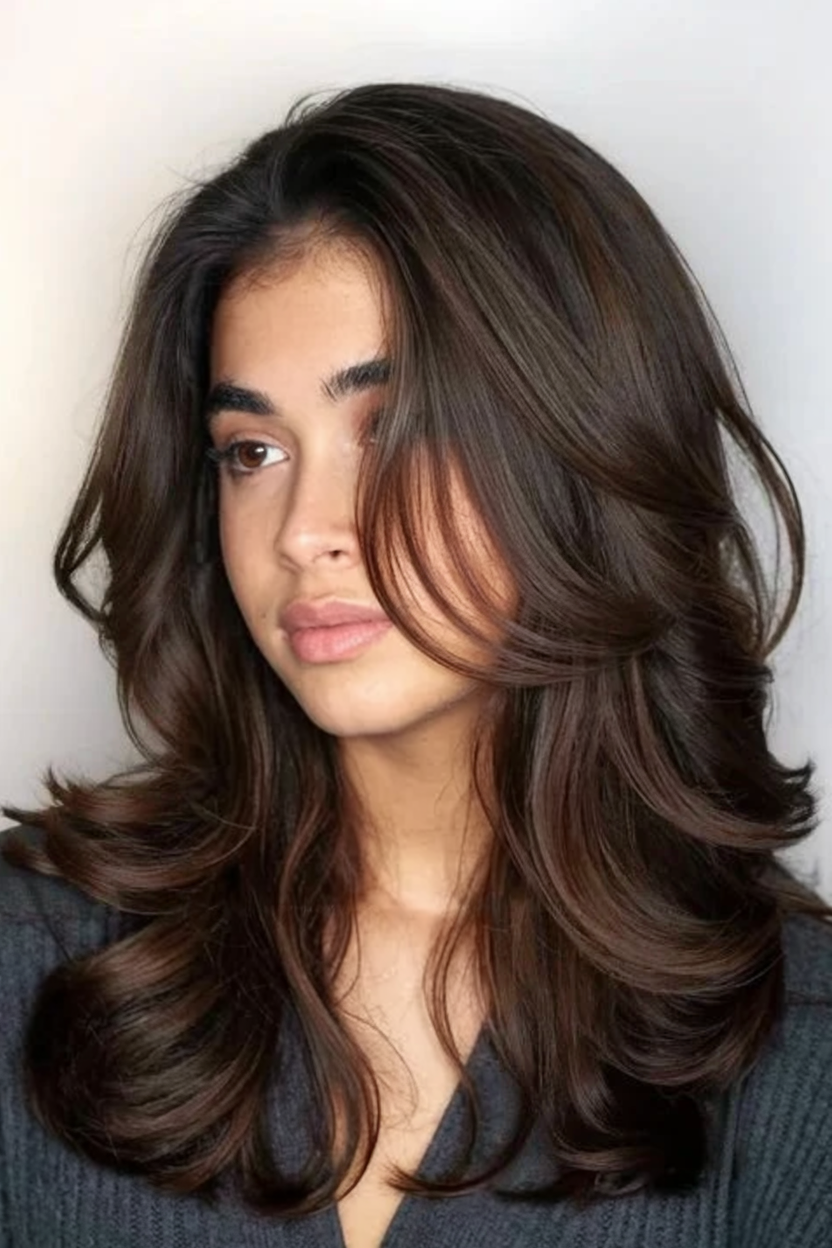
Truffle Brunette: The Autumn 2026 Colour Trend
Ask for "brunette" in October and you'll usually get a single warm brown, mixed once and applied evenly. Truffle brunette works differently. It's built from several closely related brown tones, chocolate, walnut, a neutral mid-brown, worked together through the hair rather than flattened into one shade. Cut it in half, so to speak, and you'd see the same layering you'd find in an actual truffle: dark on the outside, lighter and warmer running through the middle. That's where the name comes from, and it's also what makes the colour behave so well once the low, golden light of autumn hits it.
What makes it different from a single-process brunette
A single-process brunette is one formula, one application, one result. It's efficient, and it can look genuinely beautiful on the right head of hair, but it also has a flat quality under changing light. Truffle brunette starts from that same rich base but doesn't stop there. A stylist works two or three additional tones through it at different depths and in different places, so the colour has movement built in rather than movement added afterwards with a curling iron. The result reads as "brunette" from across the room and as something much more layered up close, which is the whole point.
Why the multi-tonal base suits autumn light
Flat warm brown can look wonderful in summer sun and slightly heavy under the low, amber light of an autumn afternoon in London. Multi-tonal brunette avoids that because it's already doing the job that light usually does for a single-process colour: creating contrast and depth. The lighter, warmer wefts catch what daylight there is and reflect it back, while the darker base tones keep the overall look grounded and rich rather than washed out. It's a colour designed to work with shorter days and softer light, not one that's relying on sunshine to look finished.
How it's actually foiled in the salon
This isn't a look you get from a single tub of colour. The base is applied first, usually the deepest of the tones, to set the overall depth of the brunette. From there, your stylist foils in two or three lighter and warmer weft tones, placed at different depths through the mid-lengths and ends rather than in one uniform pattern. Some sections sit closer to the root, others are worked lower down, which is what gives the finished colour that layered, "cut in half" quality instead of a stripy or overly blended one. Once the foils are processed and rinsed, a gloss or toner goes over the whole head to unify everything, softening any harsh lines between the tones and giving the colour its characteristic soft sheen. It's a longer appointment than a straightforward all-over colour, but it's also a lot more considered.
Who it suits
Truffle brunette is forgiving in a way flat brown often isn't. Because it's built from several tones rather than one, it tends to work across a wide range of natural bases and skin tones, and it's particularly good for anyone moving away from heavier, more obvious highlights without wanting to go fully flat and dark. It also suits hair that's had previous colour work, since the multi-tonal approach can help disguise slight unevenness left behind by old highlights or box colour in a way a single warm brown sometimes struggles to. If you've been told your hair "goes brassy" in a flat brunette, this layered approach is usually the fix, since the cooler and neutral tones in the mix help balance any warmth coming through from underneath.
Maintenance and toner refreshes
One of the appeals of truffle brunette is that it grows out more gracefully than high-contrast colour, since the base and the foiled tones are all close in depth to begin with. That said, the gloss or toner that unifies the look does fade faster than the underlying colour, which is normal with any toner. How often it needs refreshing really comes down to your own regrowth speed, how much previous colour is already in the hair, and how the hair responds to toning generally, so it's not something with one correct answer for everyone. Your stylist will be able to give you a realistic timeline once they've seen how your hair takes the colour and how it settles over the following weeks.
If truffle brunette sounds like the shift you've been after, whether you're currently going flat and warm or working your way down from heavier highlights, it's worth a proper consultation rather than guessing from a photo. Book in at Gusto Hair, Oxford Street or Covent Garden, and your stylist can talk through what the multi-tonal base would actually look like on your hair before any foil goes near it.