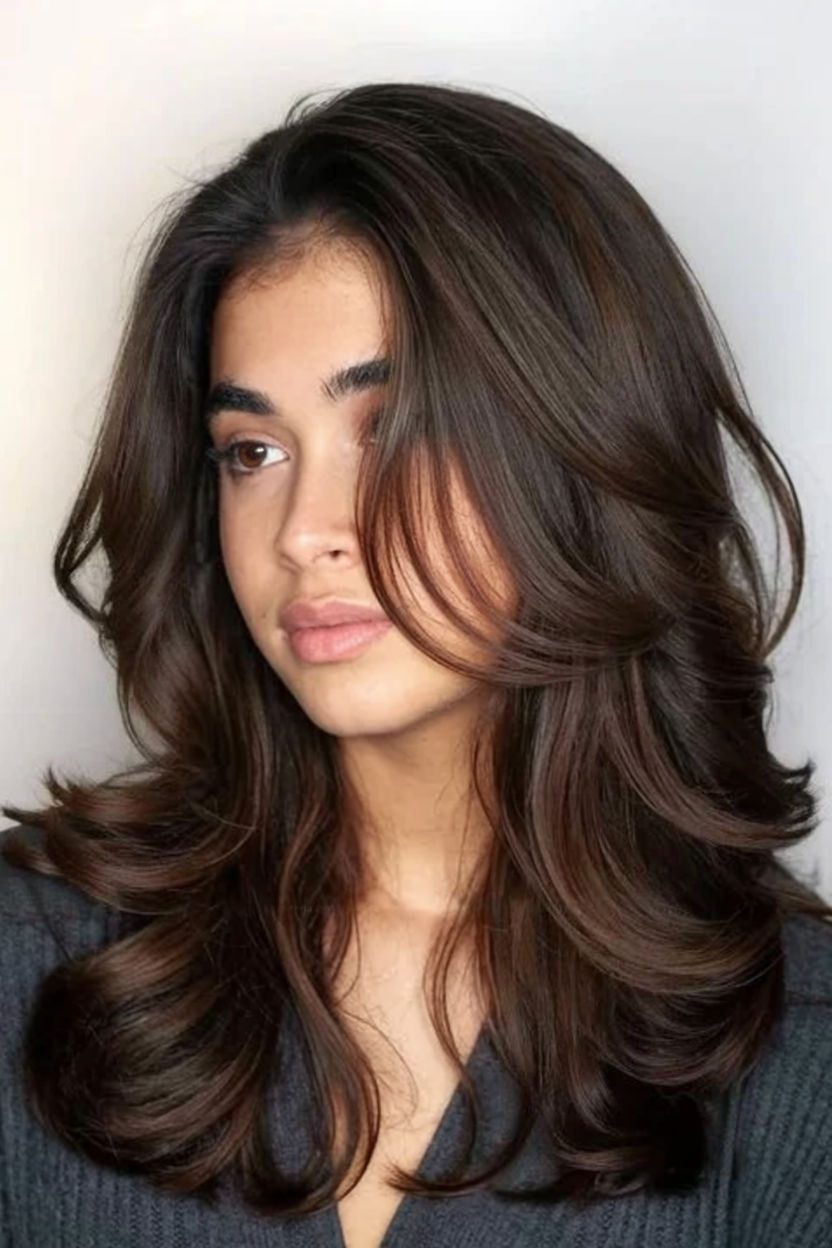
The Flipped Bob
For the last couple of years the bob has been a tucked-in affair. Ends bevelled under, edges polished, everything curving politely towards the jaw. This winter it has decided to misbehave. The ends are kicking out, the corners are full, and the whole shape has a bit of swagger again. The flipped bob is back, and it is the most fun a short cut has been in ages.
Why the Flip Is Back

Ariana Grande set it off in October with a bob that flicks out at the ends, worn with a slicked side part. Aimee Lou Wood has been wearing a very '90s bob, and the shapely, collarbone-grazing bobs on the London Fashion Week catwalks had their corners turned outwards rather than in. By November, the beauty press had named the shapely bob one of the defining cuts of the season.
The reason it lands now is simple. After years of glassy, sleek, tucked-under hair, a flick looks fresh. It is playful without being messy, polished without being stiff, and it carries a little '60s and '90s nostalgia without feeling like fancy dress. It photographs brilliantly, too, because the outward line catches the light and frames the face from every angle.
Flip or Tuck: What Is the Difference?

Think of the flip as the rebellious sibling of the high-gloss bevelled blow dry. The bevel curves the ends under towards the neck for a smooth, rounded finish. The flip does the opposite: the ends are lifted and turned outwards, so the bob opens up at the bottom and gains width at the jawline.
That width is the point. A tucked bob narrows the silhouette, while a flipped bob broadens it at the jaw and draws the eye to the cheekbones. If you have a longer or narrower face, the flip adds balance. If your face is rounder, a flip that starts just below the jaw rather than right on it keeps the shape flattering. If you are torn between the two, the good news is that the same cut can be styled both ways, and we can show you how in the chair.
The Cut Behind the Kick
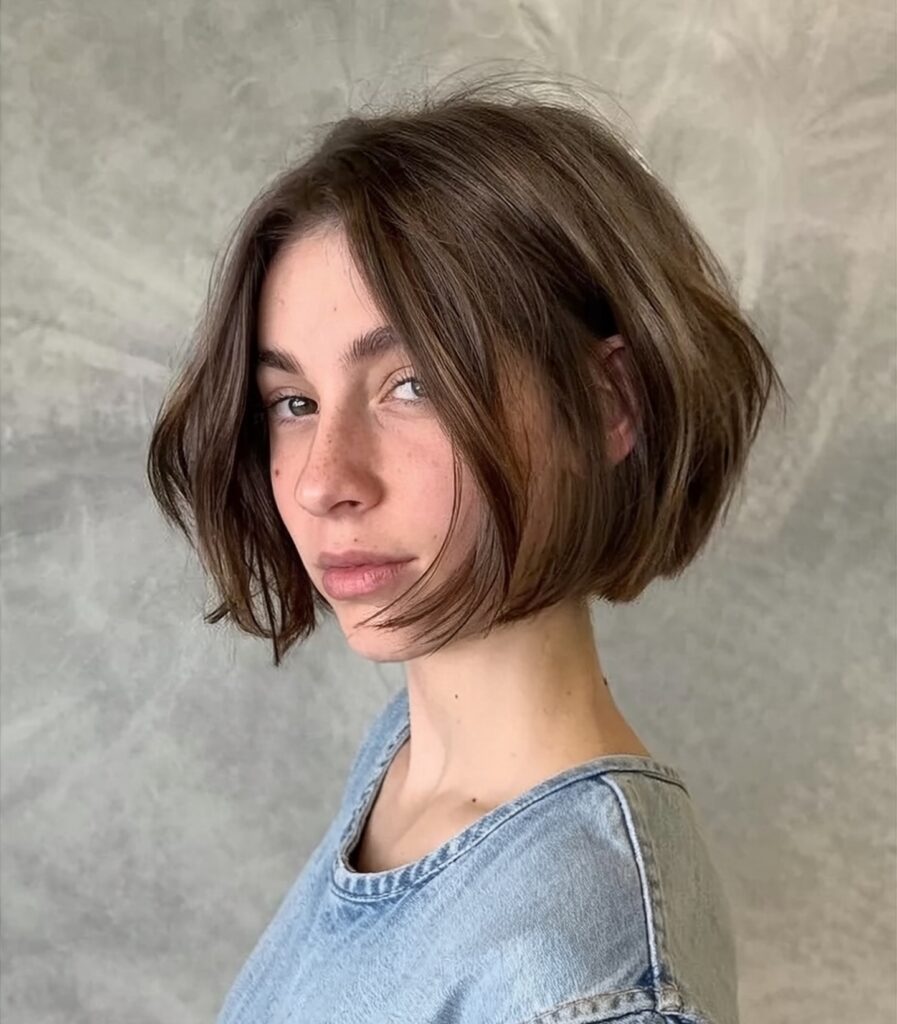
A good flip starts with the haircut, not the hairdryer. The ends need enough weight to hold an outward bend, so we keep a strong, slightly blunt baseline rather than thinning it out. Over-layered ends simply collapse when you try to flick them.
The corners matter most. We leave them full and square at the front, so when they are turned out they create that confident, shapely line rather than wispy points. Length usually sits anywhere from the jaw to the collarbone. Shorter flips feel more '60s and graphic. Longer, collarbone-grazing versions read more '90s and relaxed, and they are easier to tie back on busy days.
Fine hair suits a flip beautifully, because the outward bend adds instant volume. Thicker hair may need some internal weight removed so the ends move rather than puff. Curly and wavy hair can wear a flip too, either blown out or by encouraging the natural pattern to kick outwards at the ends. If you have recently had the Demi Moore bob or a similar blunt cut, you may already be halfway there.
How We Blow Dry the Flip

This is where our blow dry team earns its keep. Gusto was named Best Blow Dry Bar at the London Hair & Beauty Awards 2026, and the flip is one of those finishes that looks effortless only when it is done properly.
We start with a volumising mousse at the roots and a heat protector through the lengths, then rough dry to about 80 percent. Working in sections, a medium round brush lifts the roots and smooths the mid-lengths. At the ends, the brush turns the other way: instead of rolling under, we roll the ends up and outwards and hold them with heat, then a blast of cool air to set the shape. A light shine spray finishes it, so the flick looks glossy rather than crunchy.
At home, a large flat iron does the same job in less time. Smooth each section, then twist your wrist outwards for the last couple of centimetres. For a softer version, a hot air brush used in the same outward direction works nicely on second-day hair.
Keeping the Flick Through London Weather

Drizzle, damp Tube carriages and heated offices all conspire against a flip. A few habits make a big difference. Use a heat protector with some humidity resistance before styling, and always let the ends cool fully in their flicked shape before you touch them. A flexible hold spray misted onto the brush, not the hair, keeps the line without stiffness.
On day two, skip the full restyle. Dry shampoo at the roots and a quick pass of the straighteners on the ends only will bring it back in five minutes. If frizz is your nemesis, our London humidity frizz survival guide has plenty more tricks. And keep your trims regular: every six to eight weeks keeps the baseline strong enough to hold the bend.
Ready to kick out? Book a cut and blow dry at Gusto and tell your stylist you want the flip. We will shape the corners, show you the brush technique, and send you back out into London with a bob that has some attitude.